Blogs /

Fund managers spend a lot of time asking:
How do I find investors?
But in 2026, that question comes too late.
Fundraising is getting more selective.
In private equity, McKinsey found that funds raising less than $500 million accounted for just 13% of fundraising in 2025, down from 17% five years earlier. First-time fund activity also fell to its lowest level in a decade.
The signal is clear: capital is still available, but newer and smaller managers are competing harder for it.
That changes your job.
A bigger prospect list will not fix a fund investors cannot distinguish, a network that does not trust the manager, or an investor process that breaks once interest appears.
The stronger capital-raising model has three layers:
Thesis | Network | Infrastructure
“Real estate.”
“Private credit.”
“Venture capital.”
Those describe where you invest. They do not explain why an investor should choose you.
A strong thesis answers harder questions:
That came through clearly in Avestor’s recent Fund Focus conversation with Avestor co-founder Badri Malynur and fund manager Robert Carrillo.
Although Robert’s strategy centers on land, the broader discussion was about something every capital raiser faces: choosing a market, identifying where value can be created, evaluating risk, and building a strategy investors can understand.
That distinction matters even more when scale favors established capital raisers.
McKinsey found that specialist buyout funds from 2010–2022 vintages produced a 17% pooled IRR versus 13% for generalists. Specialization is not automatically superior, but the data reinforces the value of a clear, defensible edge.
Robert also pointed to something less obvious: his thesis became sharper when other fund managers started questioning it.
Through Avestor’s Deal Makers discussions and conversations with other managers, he was repeatedly asked to explain the assumptions behind his strategy, the risks he was taking, and why he believed the opportunity worked.
As Robert put it:
“It’s all training… making me better, sharper.”
That matters. A thesis can sound convincing inside your own conference room. The real test is whether it survives informed questions from people who understand deals, capital, and risk.
Good fund managers develop a thesis. Better ones pressure-test it.
Try explaining your fund without naming the asset class.
Can you clearly articulate:
If an investor cannot repeat your strategy after the meeting, your thesis probably needs more work.
A strong thesis still needs distribution, but “build your network” is incomplete advice.
The better question is:
Who already trusts your judgment, and who trusts them?
When Badri asked Robert how he finds investors, his answer was simple:
“All of my investors thus far have come from my network.”
That network can include previous investors, operators, industry peers, financial professionals, referral partners, other fund managers, and people who have followed your work long enough to understand how you think.
The opportunity is expanding.
A large network creates reach. A trusted network creates introductions.
Mercer’s 2026 research found nine in ten financial advisors already allocate to alternatives, while 88% expect to increase those allocations over the next two years.
That does not mean more investors will automatically find your fund. It means more people are entering private markets, and more managers will compete for their attention.
Map your network by trust, not contact count.
Identify:
Then give those relationships something useful to carry forward: a clear thesis, consistent education, and evidence of how you make decisions.
Build relationships, not just business ties.
Your network should be able to explain your fund when you are not in the room.
Now assume the first two layers work.
An investor understands the strategy.
They trust you.
They want to proceed.
What happens next?
They still need to move through diligence, qualification, documents, subscription, funding, reporting, distributions, and eventually another investment opportunity.
This is where fundraising often becomes an operational load.
One investor can be managed through emails and spreadsheets. But dozens of investors, multiple opportunities, different allocations, recurring communications, and ongoing reporting expose every manual handoff.
Your network creates opportunity. Your infrastructure determines whether you can repeat it.
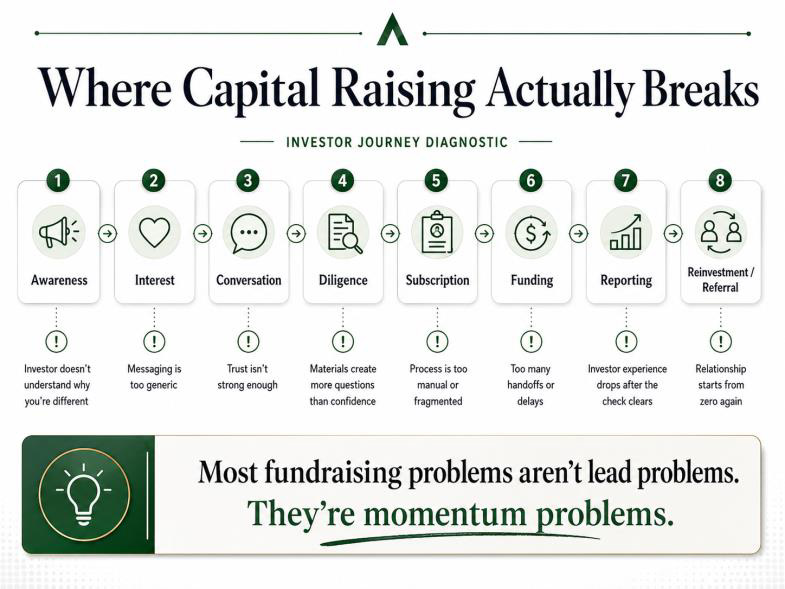
Follow your own investor journey from “I’m interested” to “I’ve invested.”
Ask:
The objective is not more software.
It is fewer points where investor momentum can die.
This is one reason Avestor was built around more than the legal structure of a fund.
Customizable Funds® bring investor onboarding, administration, and ongoing operations into the same ecosystem so managers do not have to rebuild the backend every time the next opportunity appears.
Fundraising problems often get diagnosed as lead-generation problems.
They may not be.
People take meetings but rarely move forward?
Pressure-test the thesis.
Investors respond well, but introductions are scarce?
Look at the network.
Demand exists, but every raise feels operationally painful?
Audit the infrastructure.
A fourth scenario matters too:
Excellent infrastructure with no compelling thesis or trusted distribution is still just infrastructure.
The stack works because each layer solves a different problem.
Look at your last five serious investor conversations.
That answer tells you where your next capital-raising investment should go.
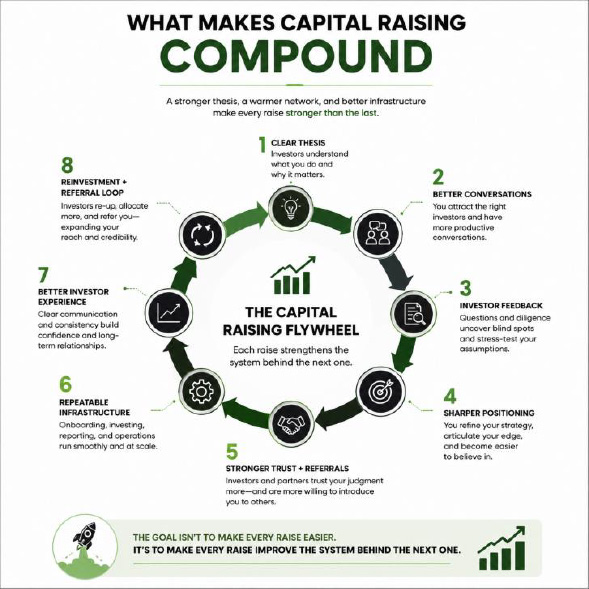
Because the goal is not simply to raise more money for the next opportunity.
The best capital-raising systems compound.
Your thesis gets sharper. Your network gets warmer. Your infrastructure carries more of the load.
That is what makes the next raise stronger than starting again from zero.
If you’re building a fund, refining your capital-raising strategy, or trying to create a more repeatable investor process, we’d be happy to talk through what that could look like.
Book a strategy call with Avestor →
We believe clarity builds confidence. Here are answers to some of the most common questions we receive from sponsors, fund managers, and investors navigating private offerings.
Get in touch with us today!
Contact Us